
Successful web design and development is where aesthetic meets functionality. We aim to increase conversions and sales for small businesses by improving their sites, or build one from scratch. We’re here to deliver concrete insights on optimizing and creating sites that both dazzle and deliver. We’ll navigate the essential blend of design flair and technical skill, arm you with the right tools, and show you how to stay ahead of the curve towards successful completion.
Successful web design and development is where aesthetic meets functionality. We aim to increase conversions and sales for small businesses by improving their sites, or build one from scratch. We’re here to deliver concrete insights on optimizing and creating sites that both dazzle and deliver. We’ll navigate the essential blend of design flair and technical skill, arm you with the right tools, and show you how to stay ahead of the curve towards successful completion.
Exploring the Synergy of Web Design and Development with Code Catalyst Media

The role of web design is as intricate as creating websites all together. We are tasked with building interfaces that are visually engaging and easy to navigate. We work with elements like color, typography, and layout (web page), creating a visual design that emphasizes aesthetics and usability. But it’s not all about making the website look good – We prioritize user experience, ensuring that the interfaces we create are not only attractive but also user-friendly. In essence, during this phase we work as the architects of the web, laying out the blueprint for user friendly websites that is visually appealing and easy to navigate -bringing together skills such as graphic design, user interfaces, creative design and core principles of web development.

While before we lay out the blueprint, now we’ll become the builders who bring the design to life. We manage the technical side of website creation, dealing with code that dictates the site’s structure and dynamic interactions and development skills. From building the underlying structure of web pages to writing server-side and client-side scripts, we ensure that your dynamic websites function as intended. Their role is vital in building websites that are not only aesthetically pleasing but also functionally robust, fortifying the artistic designs crafted by web designers – front end development and technical skills.

The collaboration between web design and development is like a well-orchestrated dance (front end web development and back end). They need to work closely together to produce a high-quality product that successfully integrates design elements and technical functionality. This synergistic partnership is necessary to align with user expectations and industry standards, guaranteeing a final product that is not only visually pleasing but also functionally robust. It’s through this synergy of design and development that we create websites that are as beautiful as they are functional.

In a world where people access the web from a variety of devices, crafting responsive web applications has become a necessity. Responsive design simplifies website maintenance by allowing a single design to serve various devices, resulting in faster page loading times and better user engagement. But it’s not just about being responsive; security is just as crucial in web development. Implementing security measures like SSL/TLS protocols and authentication methods ensures that your website is not only user-friendly but also secure. We’ll dive into these two aspects in greater detail.
Essential Practices for a Dynamic Online Presence
Essential Practices for a Dynamic Online Presence
Adapt content and elements to match various screen sizes, enhancing the user experience and contributing to SEO rankings. After all, a positive user experience is what keeps visitors coming back to your website.
Implement security measures like SSL/TLS protocols and authentication methods to ensure your website is not only user-friendly but also secure. A secure website is not only beneficial for you but also for your users who trust you with their data.
Adopting agile methodologies in web projects can greatly enhance project transparency and improve team productivity. Agile processes foster improved communication between clients and development teams, building trust and enabling a better understanding of project goals. Agile development supports easy adaptation to change, whether due to user feedback, budget constraints, or the need to integrate new features. Moreover, agile methods emphasize the prioritization of core business values, ensuring the development team concentrates on the most critical aspects for the client.
Creating an effective website is not a one-person job. It’s a combined effort of web designers and developers who contribute their creative and technical skills alike.
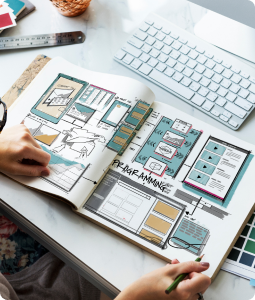
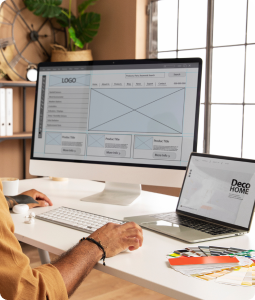
Once the wireframes are ready, the next step is to turn them into a prototype. Prototyping and user testing are crucial for validating design ideas and ensuring that the final product meets user needs. By iterating on prototypes and retesting multiple times, developers can refine the product based on user feedback. This iterative process not only enhances the overall quality of the product but also provides a deeper understanding of the user’s perspective, leading to an enhanced user experience.
The final stage of the iterative design process is launching the product. But even after the product is launched, the work is not done. The agile approach to launching focuses on incremental delivery, allowing for adjustments based on user feedback. This iterative process allows for consistent improvements and feature releases over time, which can align with business goals and engage users effectively. After all, the goal is not just to create a product but to continually improve it to meet user needs and expectations.
Creating a website requires a toolbox of essential tools and languages. From foundational languages like HTML, CSS, and JavaScript, to powerful programming languages like PHP and Java, a web developer’s toolkit is vast. However, it’s not just about the languages; tools like code editors and practice environments also play a pivotal role in the web creation process to build ful responsive websites.
Creating a successful website is not a one-and-done deal; it’s an iterative process that involves prototyping, designing, testing, analyzing, and refining.


Content management systems (CMS) offer a platform where users can manage content effectively on their own, enhancing operational efficiency. The right content management system enable individuals without technical expertise to easily create and manage their websites. We’ll examine the role of CMS in greater depth.

Creating a user-friendly website is important, but it’s only half the battle. Your website needs to be discoverable, and that’s where search engine optimization (SEO) comes in. SEO enhances your website’s visibility, making it easier for potential customers to find you. It’s not just about incorporating keywords; SEO also involves optimizing your website’s structure, speed, and responsiveness, among other things.

The front-end toolbox, essential for front end developers, consists of the foundational pillars of web development: HTML, CSS, and JavaScript. These languages enable the creation of structured content, styling, and interactivity in front end development. Developers also utilize frameworks like Angular, Bootstrap, and Vue.js, and libraries like jQuery and React to build responsive and dynamic web applications. And tools like Atom, HTML5 Boilerplate, and Google Fonts support developers in coding and iterating on front-end projects.
While the front-end toolbox focuses on the user-facing side of a website, back-end technologies handle the server-side tasks and database interactions. Languages like PHP, Python, and Ruby are commonly used in back-end development, each enabling the creation of robust web applications. And frameworks like Laravel for PHP, Django for Python, and Ruby on Rails for Ruby provide developers with tools and libraries to enhance web application development. These technologies are the engine that powers the beautiful and interactive websites we see on the web.

This iterative process allows for consistent improvements and for our web developers to release features over time, which can align with business goals and engage users effectively.
Check out our Frequently Asked Questions
No, web design does not necessarily require coding. It primarily involves determining a site’s layout, color palette, font set, and visual themes.
It can take anywhere from 1 to 4 weeks to build a your website, depends on it’s functionality.
The role of a web designer is to create visually engaging and user-friendly interfaces for websites.
Responsive web design is essential as it allows websites to adjust to different devices, improving user experience and SEO rankings.

Home
About